
Equine Chiropractic
Better movement.
Better comfort.
Better performance.
Just like people, horses can develop stiffness, restricted movement and muscular tension.
Equine chiropractic uses hands on techniques to assess and treat areas of restricted joint movement, particularly through the spine and pelvis. It can form part of a broader approach to keeping a horse comfortable, moving well and performing at their best.
Chiropractic isn't about simply "putting something back into place". It is about assessing how the horse is moving and identifying areas where mobility or function may be restricted.
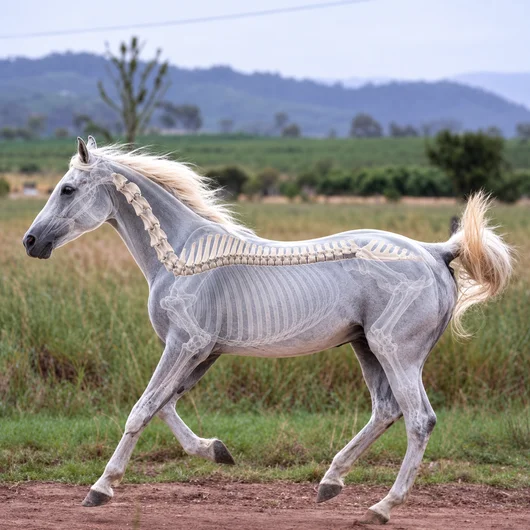
Why might a horse benefit from chiropractic care?
Horses compensate remarkably well.
A small restriction or area of discomfort can sometimes lead to changes elsewhere in the body as the horse adapts its movement.
Depending on the individual horse, chiropractic care may be used as part of a management program for:
- Stiffness through the back or neck
- Restricted spinal or pelvic movement
- Muscular tension
- Reduced flexibility
- Changes in posture or movement
- Uneven movement
- Difficulty bending or performing certain movements
- Changes in ridden behaviour
- Horses returning to work after injury or a period of reduced activity
- Performance horses requiring regular assessment and maintenance
Research into equine chiropractic is still developing. Some studies have found improvements in spinal mobility, flexibility and measures associated with back pain, while evidence for effects on lameness and performance is less consistent.
What might you notice?
Sometimes the signs are obvious. Sometimes they're not.
You may notice your horse:
- Feels stiff or resistant on one rein
- Finds transitions difficult
- Struggles to bend through the body
- Has a reduced or uneven stride
- Is reluctant to move forward
- Changes its way of going under saddle
- Shows resistance to the saddle or rider
- Develops changes in behaviour during work
- Takes longer than usual to warm up
- Doesn't seem quite like themselves
These signs can have many possible causes, including pain, lameness, saddle fit, hoof problems, dental issues or training factors.
That's why chiropractic should be considered as one part of the bigger picture, rather than a replacement for veterinary investigation when something is wrong.
A whole horse approach
At SuJoHorses, we look at the horse rather than simply the symptom.
Movement is influenced by much more than one joint or one muscle. Feet, teeth, saddle fit, conditioning, training, conformation, previous injuries and the rider can all contribute to how a horse moves.
Our goal is to understand the horse as a whole and work alongside other professionals where appropriate.
Where pain, lameness or an unexplained change in performance is present, veterinary assessment may be appropriate before treatment.
Every horse is different
There is no one size fits all approach to equine chiropractic.
A good assessment considers the horse's history, workload, behaviour and movement before deciding whether chiropractic treatment is appropriate.
The aim isn't simply to make an adjustment.
The aim is a horse that can move comfortably and confidently.
Better Movement. Better Performance. Better Horses.
Ready to book an assessment for your horse?
Get in touch