
Endurance
Preparing the horse
for the journey.
Endurance is about much more than covering kilometres.
It's a partnership between horse and rider that demands fitness, patience, preparation and a good understanding of the horse you're riding.
The best endurance horses aren't simply the fastest. They're horses that can travel efficiently, stay comfortable, recover well and remain willing to do their job.
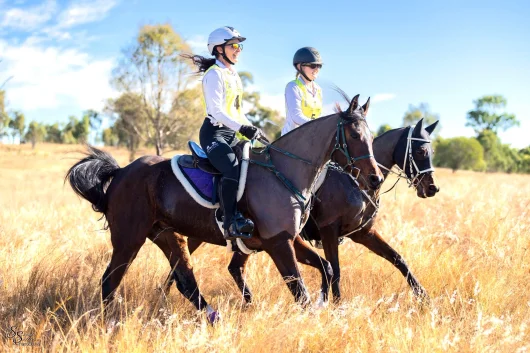
Sarah Sullivan Photography
Building endurance takes time
A horse doesn't become an endurance athlete overnight.
Conditioning needs to progressively develop the cardiovascular system, muscles, tendons, bones and feet while allowing adequate time for recovery.
Long, steady work forms an important part of endurance preparation, with terrain, distance and intensity gradually increased as the horse develops. Rest and recovery are just as important as the work itself.
Our approach is based on building the horse's fitness progressively rather than simply chasing kilometres.
More than just fitness
An endurance horse needs to be able to:
- Travel efficiently over distance
- Maintain a steady, sustainable pace
- Cope with hills and varied terrain
- Move comfortably for extended periods
- Recover efficiently after work
- Drink and eat during longer rides
- Remain calm and manageable in company
- Respond to the rider when tired
- Look after themselves physically and mentally
The rider needs to learn these things too.
Understanding your horse's normal behaviour, movement, heart rate, hydration and recovery helps you recognise when they are coping well, and when something isn't right.
Preparing for the ride
Endurance preparation isn't just what happens during training rides.
We can work on the skills and habits that make competition day easier, including:
- Travelling and settling at new locations
- Riding in company
- Pacing and speed control
- Walking, trotting and cantering efficiently
- Hill work
- Water and eating habits
- Standing quietly
- Veterinary procedures
- Recovery routines
- Strapping and horse management
- Rider awareness and decision-making
These things become particularly important at an endurance ride, where horses may encounter unfamiliar terrain, other horses, veterinary inspections and multiple stages of work and recovery.
The horse comes first
Endurance is a unique sport because the horse tells us a great deal about how the preparation is going.
Veterinary checks during Australian endurance rides assess factors including heart rate, metabolic status, injuries, soreness and gait.
Learning to listen to your horse is one of the most important skills an endurance rider can develop.
Sometimes the right decision is to keep going. Sometimes it's to slow down. And sometimes it's to stop.
The goal
Not simply to finish the ride.
The goal is to develop a horse that is fit, confident, comfortable and capable of completing the journey well.
Better movement. Better performance. Better horses.
Ready to talk about building your endurance horse?
Get in touch